


RI& KOREAN MEDICAL CLINIC
Asymmetry Clinic
TMJ & Facial Asymmetry Treatment — RI&
1:1 personalized care that helps restore TMJ function and improve facial asymmetry — based on precise examination and personalized treatment.
Facial asymmetry is not simply a bone-structure issue — it arises from a combination of factors such as TMJ imbalance, chewing habits, cervical (neck) tension, and postural imbalance, and it can be accompanied by whole-body symptoms like headache, tinnitus, and neck pain. Based on a TMJ functional assessment and postural analysis, we combine acupuncture, Chuna therapy, and physiotherapy with the aim of improving TMJ pain and facial asymmetry together.


TMJ treatment
We assess excessive tension in the muscles around the jaw and the joint's movement aiming to help relieve pain, clicking, and catching when opening the mouth, and to steady jaw movement.
Facial asymmetry treatment
We comprehensively analyze left-right differences in facial muscle tension, jaw direction, the cervical spine, and postural balance, combining acupuncture, pharmacopuncture, Chuna therapy, and myofascial release.

TYPE 01. Lower jaw shifted to one side

the jaw is crooked and the midline of the front teeth doesn't align
The earliest stage of facial asymmetry: the lower jaw is shifted to the left or right, but the upper face — eyes, cheekbones — does not yet show noticeable asymmetry. Left untreated, it can progress to TYPE 02, so early treatment matters.
- #jaw deviation
- #front-teeth midline mismatch
- #one corner of the mouth raised
TYPE 02. Upper jaw shifted in the same direction as the lower jaw

on the side where the mouth corner is raised, the eye and cheekbone have dropped
The most common type of facial asymmetry: the temporal bone externally rotates toward the side the lower jaw is shifted, so the eye and cheekbone appear sunken and distorted. As aging progresses, the eye-area lines and nasolabial fold on the distorted side deepen further.
- #temporal bone external rotation
- #cheekbone drooping
- #uneven eye height
TYPE 03. Upper jaw shifted in the opposite direction to the lower jaw

on the side where the mouth corner drops, the eye and cheekbone look more sunken
The most severe type of facial asymmetry: TYPE 02 has progressed, and displacement of the temporal and sphenoid bones has worsened. On the side the lower jaw is shifted, the eye and cheekbone line rise, and the facial bones twist through left-right, front-back, and rotational displacement.
- #sphenoid bone displacement
- #facial bone distortion
- #advanced asymmetry
Who Is RI& Customized Treatment For?
TMJ and facial asymmetry
treatment is recommended for:
- Those bothered by facial asymmetry from uneven height of the eyebrows, eyes, and cheekbones
- Those whose jaw shifts to one side when opening the mouth, or who have clicking or pain
- Those who chew on only one side, or often feel stiffness around the jaw joint
- Those who clench their teeth, or whose jaw feels stiff in the morning
- Those whose cheekbone distortion has worsened and whose facial contour seems to have changed
- Those who want correction by non-surgical methods, without incisions or implants
1:1 personalized analysis
We look at the face and posture
together in our analysis
Asymmetry in left-right eyebrow height and position
Left-right height and drooping of mouth corners, eyes, and cheekbones
Jaw deviation direction and front-teeth midline alignment
Jaw movement, catching, and clicking on opening; TMJ function
Cervical alignment, skull tilt, and overall postural balance

Main symptoms of asymmetry
TMJ disc displacement
Temporomandibular disorder (TMD)
Degenerative TMJ arthritis
Joint noise within the TMJ
Limited mouth opening
Teeth grinding & clenching
Occlusal problems & malocclusion
Asymmetry of the temporalis & masseter muscles
Cervical & shoulder imbalance
TMJ & Facial Asymmetry Treatment Process
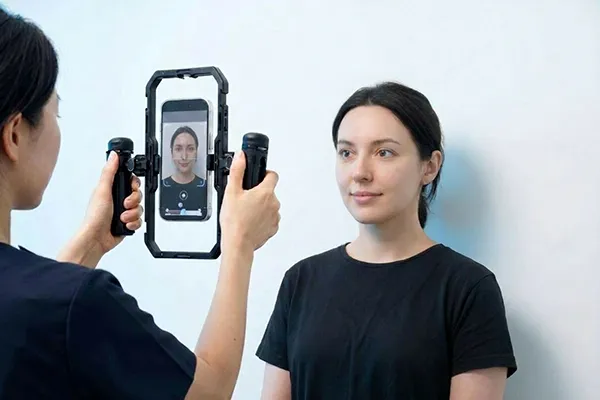
STEP 01Facial & postural analysis
Using a facial analysis device, we measure jaw deviation, mouth-opening patterns, and facial asymmetry, and comprehensively evaluate cervical, spinal, and pelvic alignment through postural analysis.

STEP 02Personalized consultation
Based on the analysis, we explain the asymmetry type and the causes of TMJ dysfunction, and establish individual treatment priorities and a plan.
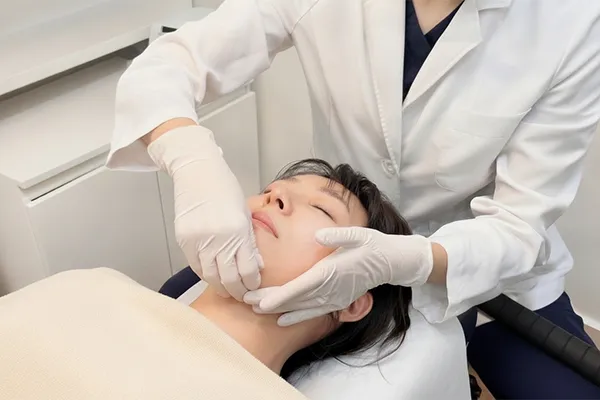
STEP 03Corrective Chuna therapy
Through an intraoral approach, we directly correct the TMJ position, then sequentially realign the sphenoid bone, skull, cervical spine, spine, and pelvis, looking into the underlying causes of facial asymmetry and aiming to improve them.

STEP 04TMJ pharmacopuncture
Regenerative pharmacopuncture that aims to ease chronic inflammation around the jaw joint, together with facial acupuncture, is used with the aim of relieving adhesion and tension of the masticatory muscles and easing pain.

STEP 05Dedicated physiotherapy
Electrical stimulation therapy designed for the facial muscles aims to improve blood circulation and balance left-right tension in the masticatory and facial expression muscles, supporting recovery of muscle function.
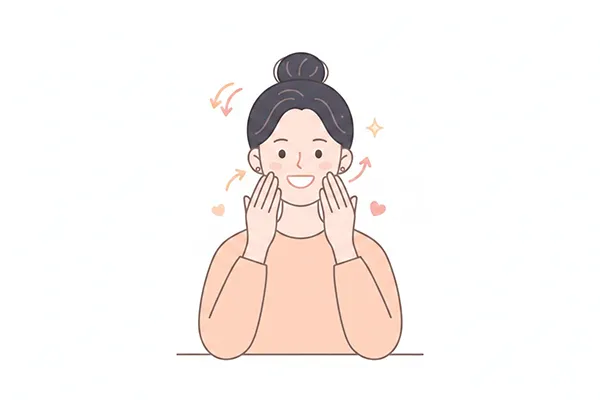
STEP 06Lifestyle reinforcement
Facial yoga guidance and lifestyle coaching on chewing habits, sleep posture, and clenching help maintain results and reduce the risk of recurrence.


Research on Acupuncture for TMJ Disorders
Effect of acupuncture for temporomandibular disorders: a randomized clinical trial
Liu L, Chen Q, Lyu T, Zhao L, Miao Q, Liu Y, Nie L, Fu F, Li S, Zeng C, Zhang Y, Peng P, Wang W, Lin Y, Li B.
QJM. 2024;117(9):647-656.


A randomized controlled trial in which 60 adults with temporomandibular disorders were assigned 1:1 to acupuncture or sham acupuncture, three sessions a week for 4 weeks. Pain intensity fell more in the acupuncture group than in the sham group at week 4 (with the difference still present at week 8), and jaw opening and jaw-function scores also improved more. There was no difference in pressure pain threshold or muscle activity (sEMG), and this was a small study of 60 people.
TMJ and facial asymmetry Q&A
Can facial asymmetry be caused by a TMJ problem?
Yes — TMJ dysfunction is one of the main causes of facial asymmetry. When the jaw joint shifts to one side, left-right tension differences develop in the masticatory and temporalis muscles, which can lead to asymmetry of the eyes, cheekbones, and jawline. Lifestyle factors such as chewing habits, sleep posture, and clenching often act in combination.
My jaw makes a sound — do I need treatment?
A clicking sound when you open your mouth can be related to a displaced TMJ disc or a joint-alignment problem. Even without pain, leaving it untreated can progress to limited mouth opening, TMJ arthritis, and facial asymmetry, so it is best to have it checked early.
Does facial asymmetry require correcting the bones?
The cause of facial asymmetry does not lie in the skeletal structure alone. In most cases, TMJ dysfunction, muscle-tension imbalance, and cervical misalignment act together. Non-surgical Chuna therapy that corrects the TMJ, skull, cervical spine, and spine step by step can help improve it, although results vary from person to person.
How long do the results last?
Facial asymmetry is not corrected completely in a single session — repeated treatment aims for gradual improvement (results vary). Without also correcting lifestyle factors such as chewing habits, sleep posture, and clenching, it can recur, so combining lifestyle coaching is important.
Are headaches and shoulder stiffness also related to the TMJ?
Yes — the TMJ is connected to the cervical spine and shoulders through fascia, so TMJ dysfunction often leads to temple headaches and neck and shoulder stiffness. Treating the TMJ together with cervical alignment correction can also help relieve headaches and shoulder tension.
How many treatment sessions will I need?
It varies with the severity of symptoms and the type of asymmetry, but early on we recommend consistent treatment about 1–2 times a week. Some people notice a change after just one session, though this varies from person to person; TMJ pain or acute symptoms often ease relatively quickly, while improvement in facial asymmetry appears gradually through repeated treatment.
Photos of people on this page are staged images, not actual patients.

