


RI& KOREAN MEDICAL CLINIC
Sebaceous Hyperplasia & Syringoma
Sebaceous hyperplasia
Sebaceous hyperplasia is a benign skin lesion in which the sebaceous glands become abnormally enlarged. It appears as slightly raised, yellowish papules with a small central depression in oil-rich areas such as the forehead, temples, and cheeks.
Although it can look similar to acne, it is not an inflammatory condition. Because the sebaceous gland itself is enlarged, it is difficult to improve with simple extraction or home care, and if left untreated, the lesions may gradually increase in number and size. It is therefore important to accurately assess the depth and distribution of the lesions and remove them while minimizing damage to the skin.

Syringoma
Syringoma is a benign skin tumor arising from the eccrine sweat glands, characterized by clusters of small, skin-colored or yellowish-brown papules that typically appear under the eyes, on the eyelids, and over the cheekbones.
Although it resembles milia or flat warts, its underlying mechanism is different. Because it originates in the dermal layer of the skin, it cannot be removed by simple extraction or home care, and precise treatment that takes the depth and distribution of the lesions into account is required.


Main Causes of Sebaceous Hyperplasia
Overgrowth of the
sebaceous glandsExcessive sebum production
Age-related changes
Hormonal influences
Constitution & skin type

Main Causes of Syringoma
Proliferation of the eccrine sweat glands
Genetic factors
Hormonal influences
Structural characteristics of the skin
Chronic irritation & skin changes
Selective Sebaceous & Sweat Gland Destruction
Using an insulated ultra-fine needle, RF (radiofrequency) energy is delivered precisely to the depth of the lesion,
selectively targeting the overgrown gland tissue while aiming to limit damage to the epidermis.
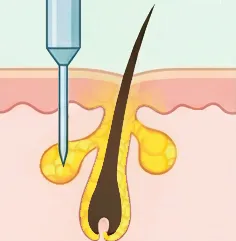
Precise Insertion
An insulated, coated ultra-fine needle is adjusted to the depth of the lesion and inserted directly into the sebaceous gland or syringoma tissue
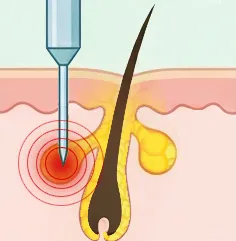
Selective RF Energy Delivery
RF energy is emitted only from the tip of the needle, thermally coagulating only the targeted gland tissue while preserving the epidermis
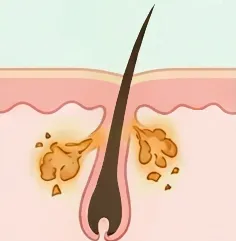
Gland Tissue Destruction
The overgrown sebaceous glands (sebaceous hyperplasia) or dilated sweat ducts (syringoma) are irreversibly damaged to help the lesion fade
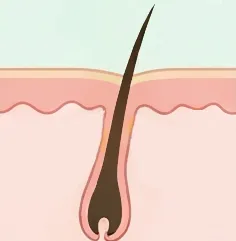
Epidermal Preservation & Recovery
The insulated needle design aims to limit damage to the epidermis and surrounding dermis; recovery varies with skin condition


Sebaceous Hyperplasia & Syringoma Treatment Process

Cleansing

Numbing cream

Lesion removal

Protective patch
or soothing care
Finishing care


Sebaceous Hyperplasia & Syringoma Q&A
How are sebaceous hyperplasia and syringoma different from acne or milia?
Sebaceous hyperplasia is a benign lesion in which the sebaceous gland itself has become enlarged — the gland tissue proliferates without any inflammatory reaction. Acne, on the other hand, is an inflammatory condition caused by excess sebum and bacterial infection, so the underlying mechanism is entirely different. Syringoma is a benign tumor arising from the eccrine sweat glands, and it differs in both cause and structure from milia, which form when keratin becomes trapped within the skin. Because all three look alike and are easily confused, it is important to get an accurate diagnosis and receive the treatment appropriate for each condition.
Why do syringomas appear mainly around the eyes?
Syringomas tend to develop in areas with a high density of eccrine sweat glands. The skin around the eyes is relatively rich in sweat glands and quite thin, so even small lesions stand out clearly. In addition, the thin skin of the eyelid area makes it structurally easier for lesions to show on the surface, which is why they often appear in clusters.
Can they come back after removal?
It is rare for a lesion to recur in the exact spot where it was removed. However, with both conditions, new lesions can develop in other areas as long as the underlying constitutional factors or skin characteristics persist. Sebaceous hyperplasia remains influenced by sebum production tendencies and skin aging, while syringoma is affected by genetic predisposition and hormonal changes — so regular skin care is recommended even after removal.
How many treatments does it take for them to disappear?
It depends on the size and depth of the lesion, but small lesions can sometimes respond to a single session. For larger or deeper lesions, however, it is safer and gentler on the skin to treat them over two to three sessions, using radiofrequency to destroy the inner tissue in stages. With sebaceous hyperplasia, larger lesions may leave some redness after treatment, which fades naturally as the skin heals.
Photos of people on this page are staged images, not actual patients.

